
Sick at Sea
Hantavirus, the MV Hondius, and Post-COVID Public Health

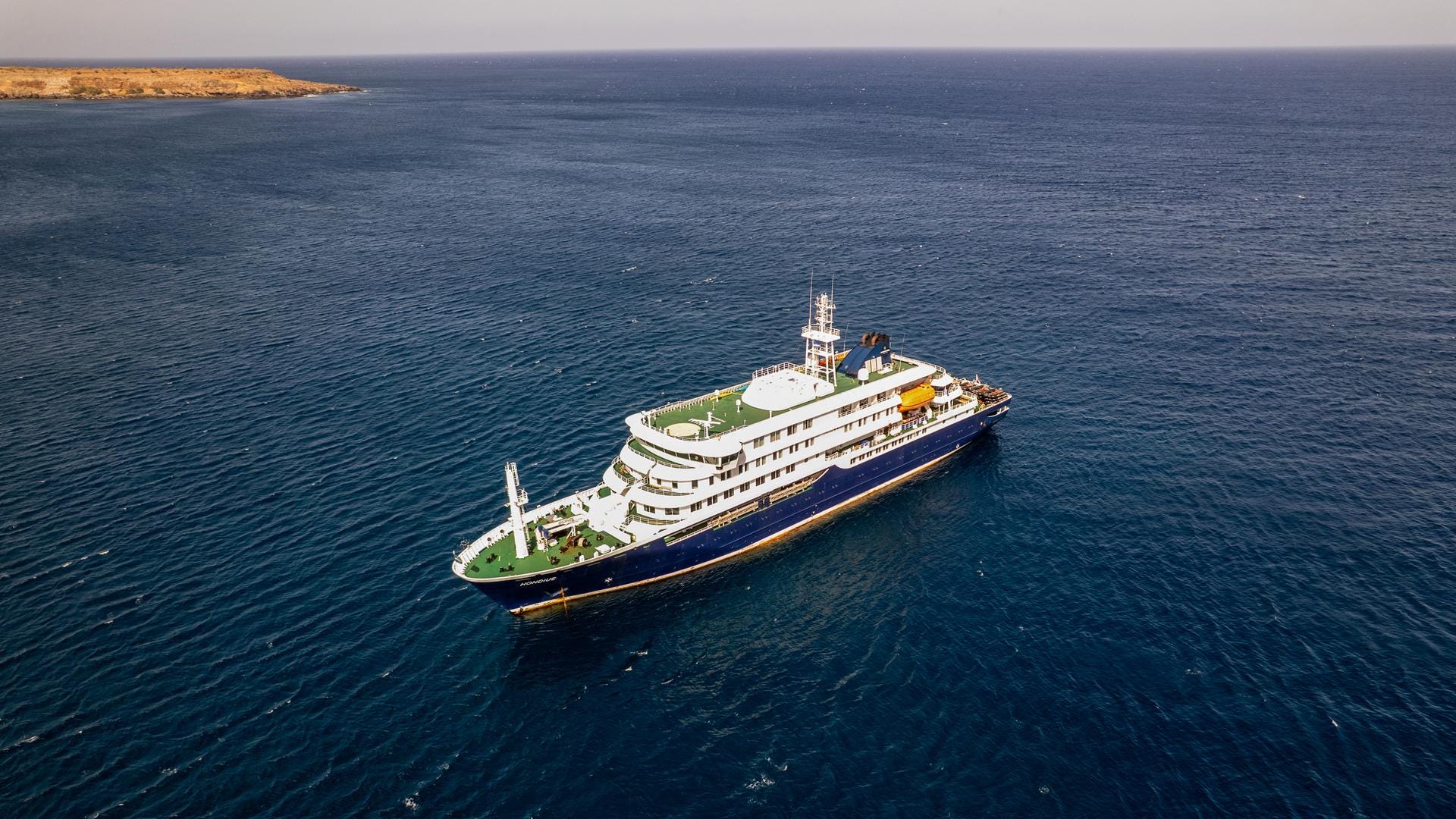
The outbreak of hantavirus aboard the MV Hondius in April 2026 is helping the global community understand the state of global health security in the aftermath of COVID and the wave of anti-intellectual populism - anti-vax, anti-science, anti-institutional - that followed. While parts of mass media and social media continued to demonstrate their irresponsibility when confronted with another infectious disease crisis, the technocratic class, including those at the World Health Organization (WHO), national public-health agencies, and European health-security institutions, demonstrated what the public-health community has done to learn the lessons of COVID-19: communicate more frequently with the public, coordinate across borders more quickly, and use improved laboratory, surveillance, and contact-tracing tools to identify, monitor, and contain a serious outbreak without triggering mass panic. WHO reported the cluster on 4 May after being notified on 2 May, assessed the global public risk as low, and described a coordinated international response involving case isolation, medical evacuation, laboratory investigation, IHR focal-point coordination, and risk communication.
What Is Hantavirus?
Hantavirus is a family of rodent-borne viruses. In practical terms, contact with infected rats, mice, or other reservoir rodents can leave a person exposed to the illness. More specifically, infection usually occurs through contact with rodent urine, droppings, or saliva, especially when contaminated material becomes aerosolized and is inhaled. WHO describes hantaviruses as rodent-carried viruses that can cause severe disease in humans, and notes that people usually become infected through contact with infected rodents or their urine, droppings, or saliva. It is not typically transmissible between humans.
The Andes virus, however, is the exception that matters here. Found primarily in Argentina and Chile, Andes virus is the only hantavirus for which human-to-human transmission has been documented, and even then, it generally requires close and prolonged contact. This is why a cruise ship is epidemiologically significant: passengers and crew share cabins, meals, airspace, and prolonged proximity in a contained environment. CDC notes that Andes virus can spread through direct physical contact, prolonged time in close or enclosed spaces, and exposure to the body fluids of a sick person.
Clinically, hantavirus can begin like a bad cold or flu, with fever, headache, muscle aches, gastrointestinal symptoms, cough, chest pain, or difficulty breathing. The danger is that the illness can progress rapidly into pneumonia, acute respiratory distress, shock, and death. WHO states that symptoms usually begin between one and eight weeks after exposure, while CDC gives a 4-to-42-day range for Andes virus.
The case fatality rate is high enough to justify serious concern but not panic. WHO states that hantaviruses in the Americas can cause hantavirus cardiopulmonary syndrome with a case fatality rate up to 50%, while also emphasizing that Andes virus transmission between people remains uncommon and associated with close and prolonged contact. That said, its human-to-human transmission is rare and inefficient compared with respiratory viruses such as SARS-CoV-2 or influenza. This is why the MV Hondius outbreak is serious, but not a plausible “next COVID” on the facts currently available.
The MV Hondius Outbreak
On April 1, 2026, the MV Hondius departed Ushuaia, Argentina, with roughly 150 people onboard. WHO reported that the vessel carried 147 individuals, including 88 passengers and 59 crew members, while ECDC described the event as a multinational cruise-ship cluster requiring European public-health coordination. The most likely hypothesis is that one or more passengers were exposed in Argentina or elsewhere in South America before boarding, with possible limited onboard transmission afterward. WHO noted that the extent of passenger contact with local wildlife during the voyage, or prior to boarding in Ushuaia, remained undetermined.
The first recorded infected individual, an adult male, developed symptoms on April 6 and died aboard the ship on April 11. A close contact later deteriorated during travel to Johannesburg and died on April 26. A third death was reported on May 3. By WHO’s 7 May update, eight cases had been reported, including five confirmed hantavirus cases and three deaths.
Recognizing the seriousness of the outbreak, authorities moved toward controlled disembarkation, medical evacuation, testing, and monitoring rather than broad travel bans or mass lockdowns. WHO advised against general travel or trade restrictions, but targeted measures were put in place: passengers and crew were advised to monitor symptoms for 45 days, symptomatic individuals were told to self-isolate, and environmental cleaning and ventilation were emphasized.
The WHO was notified on May 2. Within days, laboratory testing in South Africa confirmed hantavirus infection in one critically ill patient; subsequent reporting confirmed Andes virus in the outbreak. The UK coordinated contact tracing, the Netherlands arranged medical evacuations, Spain prepared controlled arrival and disembarkation procedures, and multiple countries monitored returning passengers or close contacts. The U.S. CDC issued a statement that six U.S. citizens were aboard the MV Hondius and that CDC was working with international partners to monitor the situation.
WHO Director-General Tedros Adhanom Ghebreyesus, WHO epidemic expert Maria Van Kerkhove, and other public-health officials repeatedly emphasized the same basic message: this is a serious and tragic outbreak, but the public-health risk is low and this is not another COVID-19. WHO’s 7 May media note stated that the global public-health risk was considered low, while CIDRAP summarized the WHO briefing with exactly that framing: “This is an outbreak on a ship, not another COVID-19.”
The Predictable Mass Media Hysteria
If there is something one learns as an epidemiologist, it is that public health and mass media hardly ever mix. Media systems that depend on reaction, outrage, and attention for productivity can make public-health emergencies significantly more strenuous and dangerous. Social media makes this worse by giving bad actors, groupthink hysteria, and misinformation immediate access to the same information environment as legitimate public-health authorities.
This hantavirus outbreak proved to be no different. Headlines and posts quickly compared the outbreak to Ebola, COVID, or the “next pandemic.” Others focused almost exclusively on the case fatality rate, the rare possibility of human transmission, or the possibility of quarantine, while leaving out the most important epidemiological fact: Andes virus does not spread efficiently through casual contact. Reuters reported that countries worldwide were tracking passengers from the virus-hit ship, but also emphasized that hantavirus is usually spread by rodents and only rarely transmitted person-to-person.
Unlike COVID, however, where the early response appeared slow, jagged, and frustrating to many, WHO, CDC, ECDC, UKHSA, and other public-health experts have remained relatively consistent so far. Their message has been clear: this is tragic, serious, and worthy of aggressive public-health response, but it is not a respiratory pandemic in the mold of COVID-19. The gap between calm, evidence-based messaging and sensational coverage shows that parts of the media ecosystem still see fear and sensationalism as more productive than technocratic, fact-based expertise. Responsible journalism and clear public-health communication remain essential, but they also need expansion.
Real-Time Updates from the Technocrats Are Key
The speed and transparency of official information is one of the major successes of this outbreak. WHO was notified on May 2 and published a detailed Disease Outbreak News report on May 4, including case numbers, symptom onset dates, deaths, laboratory status, the cruise itinerary, involved countries, and a public risk assessment. That is not perfect, but it is much closer to what the public should expect from modern outbreak communication.
Meanwhile, national and regional health agencies issued their own updates and technical guidance. ECDC published a threat assessment on May 6, describing the event as a rapidly evolving incident requiring preliminary assessment and recommendations. ECDC also assessed that the risk for Europe was very low, while still emphasizing the need for monitoring, infection control, and coordinated response.
This stands in sharp contrast to the early COVID days, when information was often delayed, fragmented, politicized, or filtered through contradictory institutional incentives. The post-COVID improvements to the International Health Regulations system, combined with better European and national digital infrastructure, allowed the outbreak to be tracked in near real time. When technocrats have the tools, mandate, and credibility to speak clearly and quickly, public trust and effective response both improve.
Advancements in Technology Sped Up and Improved the Effectiveness of the Response
This outbreak showcased several modern tools that made the response faster and more precise. The caveat is important: technology did not “solve” this outbreak by itself. The core response was still classic epidemiology: identify cases, isolate the sick, trace contacts, monitor exposed people, test samples, share information, and communicate risk. But advanced tools made each of those steps faster and more coordinated than they would have been in the past.
First, molecular diagnostics and sequencing improved pathogen identification. WHO initially reported that laboratory testing in South Africa confirmed hantavirus infection in one critically ill patient, and WHO also noted that further investigation included serology, molecular diagnostics, sequencing, and metagenomics. This allowed health authorities to move away from vague fear - “unknown deadly respiratory illness on a ship” - and toward a more precise risk assessment: a severe but poorly transmissible Andes virus cluster.
Second, contact tracing was strengthened by integrated passenger data, flight records, and cross-border information sharing. WHO reported that passenger and crew lists were shared with national IHR focal points globally. Singapore’s Communicable Diseases Agency, for example, identified and tested two residents who had been on the MV Hondius and on the same St Helena-to-Johannesburg flight as a confirmed case; Reuters reported that both tested negative and were placed under quarantine and follow-up monitoring.
Third, digital health-security platforms helped coordinate the response. ECDC’s threat assessment described the outbreak as requiring regional public-health assessment and recommendations, and WHO’s reporting shows the practical value of IHR coordination when a shipboard outbreak involves passengers and crew from multiple countries. This is the kind of technocratic infrastructure the public rarely sees, but it matters. It is the connective tissue between “a strange cluster on a ship” and a multinational response that avoids both complacency and overreaction.
Fourth, the broader vaccine-development ecosystem has changed since COVID. No licensed Andes virus vaccine was deployed in this outbreak, and it would be misleading to suggest otherwise. But mRNA vaccine platforms are now being actively explored for hantavirus. Korea University’s Vaccine Innovation Center and Moderna entered a collaboration to develop an mRNA-based hantavirus vaccine through Moderna’s mRNA Access Program, using preclinical mRNA candidates and hantavirus antigen sequence information. That does not change the immediate MV Hondius response, but it does show how COVID-era vaccine platforms are being redirected toward other serious pathogens.
Finally, real-time open-source tracking helped the public and analysts map the ship’s route, timeline, and response environment almost instantly. These dashboards should not be treated as substitutes for WHO, ECDC, CDC, or national public-health agencies. But as OSINT supplements, they gave analysts a clearer picture than would have been possible even five or ten years ago.
Taken together, these technologies did not replace shoe-leather epidemiology. They accelerated it. They gave decision-makers the data needed to act decisively without overreacting.
Conclusion
The hantavirus cluster on the MV Hondius is not another COVID. Rather, it is a reminder of the scars that pandemic left behind, and the lessons society needed to learn as a result.
We have learned that parts of mass media and social media still struggle with nuance, and that fear can spread as fast as facts - sometimes faster. We have also learned that when real-time information flows from credible sources, and when modern surveillance, diagnostics, sequencing, data-sharing, and contact-tracing tools are deployed quickly, the world can contain a serious pathogen without panic or lockdowns.
Losing three passengers aboard the cruise is a tragedy. But the fact that this outbreak has remained a limited cluster rather than a global event shows genuine progress. The lesson is clear: invest in transparent technocratic systems, cutting-edge surveillance technology, and honest public communication, and the world can face the next zoonotic threat far more effectively than it did in 2020.